
 British watchmaking isn’t just ticking along — it’s full of secrets. Here are 10 surprising facts that might just change how you see time itself.
1. Thomas Mudge invented the lever escapement.
In 1755, Thomas Mudge created the lever escapement, a mechanism so successful it became the backbone of nearly every mechanical watch ever made. From Rolex to Seiko, the heart of today’s watches still relies on Mudge’s invention. Few contributions to horology have endured this long.
2. The word “chronometer” was British.
London watchmaker John Arnold coined the term “chronometer” in the 18th century to describe his highly precise marine timekeepers. The word stuck, becoming the ultimate badge of accuracy. To this day, Swiss brands engrave it proudly on their dials — a British word that defines precision.
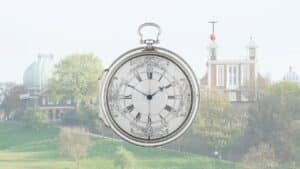
3. Harrison’s H4 solved the Longitude problem.
In 1759, John Harrison unveiled the H4 marine chronometer, finally solving the centuries-old challenge of determining longitude at sea. His invention won the Longitude Prize, reduced shipwrecks, and made ocean travel far safer. It wasn’t just a watch — it changed the course of exploration.
4. Britain once produced more watches than Switzerland.
In the early 1800s, Britain was the world’s watchmaking powerhouse, with London and Liverpool output surpassing Switzerland. The dominance lasted until the Swiss perfected industrial-scale production. Today we remember the Swiss as leaders, but Britain once wore that crown.
5. Breguet’s tourbillon was tested in London.
In 1809, Abraham-Louis Breguet sent one of his first tourbillons to London to be examined by the Worshipful Company of Clockmakers. That decision shows how much authority Britain held in global horology. Even Europe’s greatest innovators sought London’s approval.
6. Greenwich Mean Time set the world’s clocks.
At the 1884 International Meridian Conference, Greenwich was chosen as the zero point of longitude. GMT became the global standard, aligning railroads, shipping, and communications worldwide. To this day, every timezone is measured east or west of London.
7. George Daniels and the Co-Axial escapement.
George Daniels working almost entirely alone on the Isle of Man, hand-built fewer than 30 complete watches in his lifetime — each crafted entirely by his own hands. But his greatest contribution came in 1974, when he invented the Co-Axial escapement, the first practical new escapement in 200 years. Omega later adopted it, and today millions of Swiss watches tick with Daniels’ British ingenuity at their core.
8. British watchmaking shaped military history.
During both World Wars, British forces relied on watches supplied or designed at home, from pocket chronometers used by the Royal Navy to robust trench watches worn by soldiers. These timepieces weren’t just accessories — they were tools of survival, helping coordinate operations with life-or-death precision.
9. The British Empire demanded “world time” watches.
During the height of the Empire, pocket watches were crafted to show multiple time zones, including London, Calcutta, and Hong Kong. These early “world timers” reflected Britain’s global influence. Long before wristwatches offered the complication, pocket watches were keeping empire time.
10. Clerkenwell was London’s “Little Switzerland.”
In the 18th and 19th centuries, Clerkenwell was packed with watchmakers, engravers, and suppliers. It rivaled Geneva as one of the densest hubs of horological talent. Today, little remains of that trade, but collectors still remember Clerkenwell as Britain’s great watch district.
Bonus Facts
11. The first waterproof watch case was British.
In 1871, Francis Baumgartner patented a waterproof watch case decades before Rolex launched the Oyster. His design was a crucial step toward durable, everyday watches. The Swiss may have made it famous, but Britain did it first.
12. Britain pioneered electric watches.
In 1923, London-based Leon Hatot developed one of the earliest electric watches, decades before quartz would dominate. It proved that British watchmaking wasn’t only about tradition — it also had a bold eye on the future.
13. British watchmaking is still going strong.
Though its golden age has passed, Britain still has a vibrant watch industry today. Brands like Bremont, Christopher Ward, Garrick, and Roger W. Smith carry the torch, blending craftsmanship with modern design. British horology remains alive, respected, and quietly growing.
What Britain gave to watchmaking wasn’t noise or spectacle, but quiet revolutions — inventions that altered the very rhythm of the world. From workshops tucked away in London alleys to solitary masters on windswept islands, the craft pressed forward with a kind of stubborn grace, shaping how time itself is kept. That pulse hasn’t vanished; it lingers in every balance wheel, every escapement, every tick that carries a trace of British ingenuity.