
You glance down at your wrist and notice it: a tiny crack in your Longines watch crystal. It is small. It is subtle. It is the kind of flaw that might tempt you to call it character and convince yourself you will deal with it eventually. Probably right after reorganizing the garage or finally watching that critically acclaimed show everyone keeps yelling at you about. The watch still runs. It still looks good at arm’s length. So what is the harm?
The short answer is “plenty.” The longer answer involves moisture, dust, aging materials, and the slow-motion chaos that starts the moment that crystal stops doing its job. If you own a vintage Longines, this is not a cosmetic shrug-and-move-on situation. Let’s dig into why addressing that cracked crystal is more urgent than it might seem.

Why Vintage Longines Crystals Deserve Extra Respect
Older Longines watches came from a different era of design priorities. They were built to be elegant, slim, and refined, not to survive a Marvel movie fight scene. Many used acrylic crystals because they were lightweight, clear, and easy to shape into beautiful profiles that hugged the case just right.
Acrylic has its charms, but toughness is not its superpower. It scratches easily, cracks more easily than modern sapphire, and once damaged, it stops being a reliable barrier.
Not all vintage Longines watches used acrylic crystals. Some later models were fitted with mineral glass. These can be scratched from daily wear or cracked by significant impact.
A hairline crack may look harmless, but it creates a direct path into the watch. Dust, humidity, and temperature changes can all slip past that tiny opening. Over time, those elements settle where they don’t belong, slowly affecting components you can’t see.
As these watches age, their defenses weaken. Gaskets dry out. Case tolerances loosen. Damage that might have once required a serious impact can now happen from an accidental bump against a door frame or desk edge. A crack is no longer a hypothetical problem. It is an open invitation.
The Real Problem Is What You Cannot See
The biggest danger of a cracked crystal is not the crack itself. It is what sneaks in afterward. Moisture is the main villain here, and it does not need a dramatic dunk in water to do damage. Everyday humidity is enough.
Once moisture enters the case, corrosion can begin quietly and efficiently. Steel parts start to rust. Tiny components suffer before anything obvious appears on the outside. By the time you notice fogging under the crystal, the damage has already RSVPed and brought friends.
Dust is the less flashy but equally threatening sidekick. Fine particles can settle on the dial, discolor luminous material, or migrate into the movement. Inside the movement, dust mixes with aging lubricants and creates friction, which affects accuracy and accelerates wear. It is like sand in a bicycle chain, except the bicycle is a precision machine that predates the internet.
Small Cracks Have Big Ambitions
A crack in a watch crystal rarely stays the same size. Temperature changes, pressure differences, and normal wrist movement all stress the damaged area. What starts as a hairline can spread into something far more dramatic.
If the crystal fractures further, pieces can fall inward. That is when things get expensive. Shards can scratch dials, damage applied markers, bend hands, or interfere with the hands’ rotation. Suddenly, what could have been a straightforward fix turns into a complicated restoration. Vintage parts are not sitting on a shelf at that mall watch kiosk, and replacements are often scarce.
Taking care of the issue early keeps you in control. You protect the original dial, preserve the correct look, and avoid turning a minor repair into a major event.
Value, Collectability, and First Impressions Matter
Collectors notice details. Watchmakers notice details. People you meet notice details. A cracked crystal sends a message, and it is not a flattering one. Even if the movement is healthy, visible damage suggests neglect.
Moisture damage to a dial or corrosion inside the movement can permanently reduce value. Some dial damage cannot be undone without refinishing, which further affects collectability. Replacing a crystal promptly helps protect the components that actually define the watch’s character.
Value is not only about resale. It is about stewardship. Keeping the watch as close as possible to how it was meant to look and perform is part of respecting its history.
The Right Replacement Means Everything
Replacing a cracked crystal is not a one-size-fits-all situation. The replacement needs to match the original style and profile. Acrylic, mineral glass, and sapphire all behave differently, and not every option makes sense for a vintage Longines.
Acrylic is often the best choice for older models. It preserves the original look, including the subtle edge distortion that collectors expect. It also absorbs impacts better than harder materials, which can reduce the risk of future case damage. Installing sapphire on a watch that never had it can change the watch’s appearance and how it wears over time.
Fit matters just as much as material. A properly fitted crystal restores the seal between the case and the outside world. A poorly fitted one is like a raincoat with a hole in its hood. Technically clothing, practically useless.
In addition to the material, how the crystal is installed is critical. This is where Longines watch repair experience becomes important. Vintage models have quirks, and getting the details right protects both function and authenticity.
Resealing and Testing Are Not Optional
Replacing the crystal alone does not finish the job. Once the case is opened, it needs to be resealed properly. That means inspecting gaskets, replacing them if necessary, and making sure everything seats as intended.
Pressure testing confirms that the case can handle normal exposure to humidity and daily wear. This step is especially important if the watch actually leaves the house and does not live a life of quiet admiration in a drawer.
Skipping resealing and testing might save time today, but it increases risk tomorrow. Proper follow-through protects the movement and extends the watch’s lifespan. Professional watch repair should include pressure testing.
Know When to Declare a Watch Emergency
Any visible crack is a reason to pause wrist time. Continuing to wear the watch increases exposure to moisture and dust, especially if you move between indoor and outdoor environments.
Fogging under the crystal, loose edges, or changes in how the hands move are warning signs that internal components may already be affected. Acting quickly can mean the difference between routine service and a full-scale restoration.
Preventive care is usually far less expensive than reactive repair. It is the same logic behind dental cleanings, just with smaller tools and more springs.
A Watch With a Past Deserves Protection
Many Longines watches are tied to personal history. They might be family heirlooms, milestone gifts, or reminders of specific moments. Protecting that history means paying attention to issues that seem small but are not.
A cracked crystal feels cosmetic until you understand what it allows to happen inside the case. Addressing it promptly protects appearance, function, and value in one move. It also means you get to keep wearing the watch with confidence instead of quietly worrying every time the weather changes.
In the end, a Longines is built to last, but it still needs a little help from its owner. Fixing a cracked crystal is not overreacting. It is doing your part to make sure that decades from now, the watch is still ticking and still telling its story.
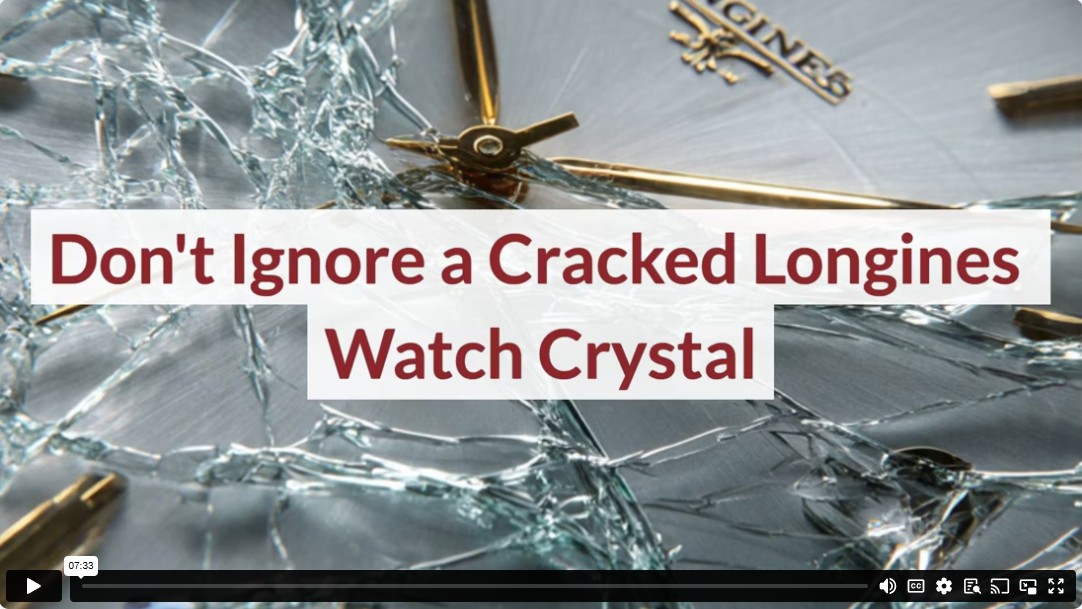
Video
Infographic
A small crack in your vintage Longines crystal may seem minor, but it’s more urgent than it appears. This infographic explains why even tiny crystal damage matters and how it can affect your watch’s long‑term condition.