
You are at a dealer table, or working through auction listings at 1 a.m., and two names keep surfacing: Smiths and Vertex. Both British. Both tied to historical moments that most watches never get close to. Both beloved by collectors who care about where a timepiece has been.
The question of which holds its value better doesn’t have a clean answer. The answer is context-dependent, and starts with understanding why collectors value each brand.
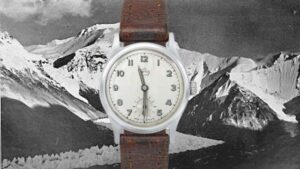
Smiths and the Mountain That Made Them Famous
Smiths was among Britain’s last surviving domestic watch manufacturers, producing movements from its Cheltenham factory during an era when Swiss dominance had already thinned the field considerably. The brand’s defining moment came on May 29, 1953, when Edmund Hillary reached the summit of Everest wearing a Smiths De Luxe, while Tenzing Norgay’s watch that day was a Rolex.
That association planted Smiths permanently inside the mythology of British exploration, though Rolex has never quite let the story go either. Ask a shop that specializes in Rolex repair, and you’ll get one version of it; ask a Smiths collector, and you might get another. But Hillary went on record saying he was wearing the Smiths at the summit.
Beyond the Everest story, these were watches built for function. Accurate, robust, and priced for working people rather than collectors, they reflect an engineering philosophy that valued performance over decoration. That means no unnecessary complication, no flourish for its own sake. The movements are honest machines built to do their job reliably and without ceremony.
That utilitarian character is exactly what draws a certain kind of enthusiast today. The Smiths collector tends to value narrative over rarity. They want a watch connected to a genuine historical moment in an accessible, unpretentious way. Smiths watches are generally more affordable than Vertex pieces, making them a practical entry point into vintage British collecting.
A well-preserved Smiths holds its value solidly, particularly for Everest-adjacent references and examples in original, unpolished condition.
Vertex and the Prestige of the Dirty Dozen
Vertex occupies a different tier of British military heritage. During the Second World War, the British Ministry of Defence commissioned watches from 12 manufacturers to supply the armed forces. Collectors have come to call this group the Dirty Dozen, and Vertex was one of them. That designation carries significant weight in the vintage market.
Dirty Dozen watches sit at the intersection of practicality and history. These were instruments issued to soldiers, and every design element served a purpose. That includes the broad-arrow markings that indicated the watch was British government property, the legible dial, and the sturdy case built to withstand punishment that would ruin most dress watches. Collectors prize Vertex pieces for their clean presentation and solid, purposeful construction.
The military provenance of Vertex gives them a rarity premium that Smiths, for all its Everest pedigree, generally doesn’t match. Surviving examples in good condition are harder to find. When they surface, collectors move on them quickly.
The Vertex collector is typically more focused on documentation, provenance, and originality than the Smiths collector, because those factors have a direct, measurable effect on what the piece commands at sale.
Two Collectors, Two Different Motivations
Choosing between Smiths and Vertex comes down to what you are collecting for. These serve different collecting purposes and appeal to different collector personalities.
Smiths collectors are drawn to British industrial history, the romance of exploration, and the quiet dignity of a workhorse brand that exceeded expectations on the world’s highest mountain. The price of entry is lower, which means stronger examples are often within reach without significant budget strain. The trade-off is that Smiths watches rarely climb to the same price heights that top-condition Vertex pieces can reach. That can be good when you’re acquiring them, but it does limit investment potential somewhat.
Vertex collectors pursue military precision and scarcity. The Dirty Dozen provenance is documented and verifiable, and the market has priced it accordingly. The ceiling for exceptional Vertex pieces is higher, which matters to anyone with long-term investment value in their collecting logic. The risk is that condition standards are tighter. A Vertex with a refinished dial or a replaced crown loses meaningful value, more so than comparable modifications would cost a Smiths piece.
What Moves the Needle on Value
In both cases, value responds to the same core factors, though with different intensity depending on the brand.
Originality is the biggest lever. Both brands reward collectors who find unpolished cases, untouched dials, and original crowns. For Vertex, this applies especially to dial condition. Original lume plots and intact military markings are closely scrutinized, and replacements draw immediate discounts. For Smiths, originality still matters, but the market is somewhat more forgiving of honest wear, because these were everyday watches rather than precision military instruments issued under strict specifications.
Reference matters equally. Not every Smiths or Vertex model carries the same collector demand. Smiths pieces with direct Everest connections attract the most attention among that brand’s offerings. For Vertex, Dirty Dozen examples outperform civilian models by a considerable margin. The reference you’re holding changes the conversation significantly, so it’s best to pin that down before you buy or sell.
Documentation is helpful but rarely available for watches of this era. Any traceable history, including military records or provenance linking the watch to a specific unit or theater, can add meaningfully to value even without the original box and papers.
Condition, Servicing, and What Collectors Check
Poor condition penalizes both brands equally. A Vertex with a careless repair history is worth substantially less than a carefully maintained example. The same holds for Smiths. This is one way professional watch repair factors into the collecting calculus.
Collectors examining vintage pieces look closely at whether past service work was done correctly. A movement cleaned and regulated by someone who understood the original tolerances and applied appropriate lubricants in the right quantities runs better and attracts more confident buyers. A movement handled without care shows it: in irregular timekeeping, worn pivot holes, or lubricants that congealed long ago and were never addressed.
Correct servicing protects both function and long-term value. Done well, it extends the life of the movement without compromising originality. Done poorly, it permanently reduces what the piece can bring, as well as how it runs.
A verified service history with an experienced hand behind it is a meaningful point of confidence for buyers of either brand, and it often shows up directly in the final price.
The Verdict on Holding Value
Vertex holds its value more strongly at the top of the market. Dirty Dozen provenance, scarcity, and tight collector standards create a floor that well-preserved examples rarely fall through. For collectors who treat watches as both a passion and a long-term hold, that floor matters.
Smiths offers a different kind of stability. The Everest connection keeps demand consistent, and the accessibility of the brand means a healthy pool of buyers at any given time. The ceiling may not reach the heights a verified Vertex can command, but the market for Smiths is reliable and broadly understood.
The collector who can evaluate condition accurately, values documentation, and is prepared to pay more for the right example will generally find Vertex the stronger long-term hold. The collector who wants meaningful British horological history at a more accessible entry point, with a wider margin for condition variance, will find that Smiths delivers reliably on that promise.
Both watches earned their reputations honestly. Which one holds its value better depends largely on which kind of collector you are.