
On the morning of July 1, 2026 thousands of people did something that would have sounded ridiculous just a week earlier.
They refreshed the same webpage.
Again.
And again.
Some were at work pretending to answer emails. Others were sitting at the kitchen table with coffee in one hand and a phone in the other. Collectors in Japan watched the reservation page go live. Fans in Europe stayed awake long after midnight. Americans, who couldn’t even order the watch yet, were already searching Reddit and Facebook for anyone who knew how to get one.
Nobody was trying to buy concert tickets.
Nobody was waiting for a new iPhone.
They were all chasing a $270 Casio.
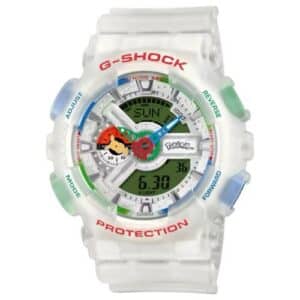
 The watch was the new Casio G-SHOCK GA-110PKM, created to celebrate Pokémon’s 30th anniversary. Reservations opened in Japan on July 1 ahead of its July 17 release, with a retail price of ¥33,000. Casio even warned customers that demand could slow its website, a subtle acknowledgment that the company knew this launch wasn’t going to be ordinary. Before a single watch had reached a customer’s wrist, social media was already filled with screenshots, translated announcements, reservation tips, and one question that seemed to appear every few seconds:
“Did anyone actually get one?”
Watching the launch unfold was fascinating because it revealed something bigger than a watch release. It showed what happens when two of the world’s most passionate collector communities collide.
On one side stood G-SHOCK collectors.
They’ve seen this before.
For decades, Casio has quietly built one of the strongest collector cultures in the watch industry. Limited editions come and go, collaborations disappear overnight, and references that sat on store shelves one year become nearly impossible to find the next. Veteran collectors know hesitation can be expensive. If a collaboration feels special, you don’t wait for a sale. You decide immediately, because someone else already has.
On the other side were Pokémon fans.
Not children.
Adults.
The children who once rushed home to play Pokémon Red and Blue are now in their thirties and forties. They collect watches, restore Game Boys, frame trading cards, and have the disposable income to buy the things they dreamed about owning years ago. Pokémon never really disappeared from their lives—it simply grew up with them.
Then came the third group.
Resellers.
 Within hours of reservations opening, listings began appearing online from people who didn’t even have the watch yet. That’s become part of modern collecting. The moment demand outpaces supply, the secondary market wakes up. Some collectors hate it. Others accept it as inevitable. Either way, it changes the psychology of every release. Suddenly, buying a watch isn’t just buying a watch. It feels like winning—or losing—a race.
Spend an hour reading the discussions from launch week and a pattern quickly emerges.
Someone asks whether the watch will be released outside Japan.
Someone else posts a retailer link.
Another collector shares a screenshot of a confirmation email.
Then comes the inevitable comment.
“I had it in my cart…”
Every major collectible release seems to produce that sentence.
Sneaker collectors say it.
Rolex buyers say it.
Trading card collectors say it.
This time, Pokémon fans joined the chorus.
That may be the most interesting part of the entire story. The launch wasn’t really about specifications. It was about participation. People wanted to be part of the moment. They wanted to remember where they were when the watch dropped, just as another generation remembers standing in line for the first iPhone or spending hours trying to buy a MoonSwatch.
The irony is that the watch itself isn’t loud.
In fact, Casio showed remarkable restraint.
It would have been easy to make something that looked like a toy. Bright yellow resin. Pikachu covering the dial. Giant Pokémon graphics on every surface.
Instead, Casio designed a watch that rewards attention.
The familiar red, blue, and green color palette quietly recalls the original Pokémon games. The subdial resembles a Poké Ball without becoming cartoonish. Pikachu is integrated into the display rather than dominating it. Thirty Pokémon appear across the strap, marking thirty years of the franchise, while perhaps the smartest design decision is one many owners won’t notice immediately.
Mew.
Hidden on the band loop.
If you grew up during Pokémon’s early years, you’ll understand why that’s brilliant.
Long before walkthroughs, YouTube videos, and wikis, every school had a rumor about Mew. Someone claimed it was hidden beneath the truck near the S.S. Anne. Someone else insisted they’d seen it. Every friend seemed to know someone whose older brother had actually caught one. None of the stories were true, but millions of children believed them anyway because Pokémon wasn’t just a game—it was a mystery waiting to be solved.
By hiding Mew instead of celebrating it, Casio recreated that feeling. The watch has its own little secret, and discovering it feels surprisingly satisfying.
Beneath those details remains a genuine G-SHOCK. The GA-110 platform offers the rugged durability collectors expect: shock resistance, 200-meter water resistance, world time, stopwatch, countdown timer, alarms, and LED illumination. In other words, once the excitement fades, you’re still left with a capable everyday watch.
But that isn’t what made this release unforgettable.
The real story happened before the first shipment ever left the warehouse.
It happened on Reddit, where collectors compared reservation strategies with strangers they’d never meet.
It happened in Facebook groups where people translated Japanese announcements for complete strangers.
It happened in Discord servers where hundreds of enthusiasts counted down together.
It happened every time someone refreshed a webpage hoping the next click would be the one that finally worked.
That’s the part people will remember.
Years from now, someone will glance at this watch and think about Pikachu or Mew.
But many collectors will remember something else entirely.
They’ll remember the morning of July 1.
They’ll remember racing thousands of strangers around the world for the chance to buy the same $270 watch.
And they’ll remember that, for one brief moment, the internet felt exactly like the Pokémon games had all those years ago.
Everyone was searching for the same rare prize.
Not because they needed it.
Because they wanted to be one of the people lucky enough to catch it.