
Before Switzerland became the symbol of luxury, America became the symbol of precision. In the 19th century, while Europe built by hand, the United States built by machine—and in doing so, revolutionized how the world kept time. From the factories of Massachusetts to the railroads of Illinois and Ohio, American innovation turned watchmaking from a craft into an industry and timekeeping into a national identity.
It began in 1850, when Aaron Dennison, Edward Howard, and David Davis founded the American Horologe Company, soon renamed the American Waltham Watch Company, in Roxbury, Massachusetts. By 1854, they were producing watches with interchangeable parts—an idea so revolutionary it reshaped global manufacturing. Waltham’s watches became synonymous with precision and reliability, trusted by soldiers, surveyors, and especially the growing railroad system that demanded accuracy to the second.
In 1858, Edward Howard left Waltham to found E. Howard & Co. in Boston. Howard believed machine precision and human craftsmanship could coexist, producing hand-finished watches of such quality they became the preferred choice of naval officers and engineers. A Howard wasn’t just a timepiece—it was a statement of refinement and trust.
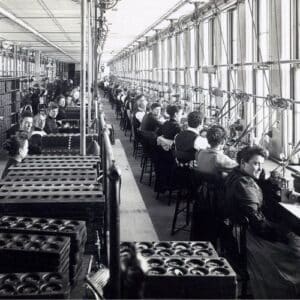 By 1864, American watchmaking was expanding westward. The National Watch Company, later renamed the Elgin National Watch Company, opened its massive factory in Elgin, Illinois. Elgin mastered the art of large-scale precision, producing millions of affordable, accurate watches. If Waltham built the future of watchmaking, Elgin made that future available to the masses.
In 1865, the United States Watch Company of Marion, New Jersey, was founded. Though short-lived, it produced some of the finest movements of its day and established a standard that influenced later factories in Trenton and beyond. A few years later, the United States Watch Company of Waltham (1879–1881) emerged as a rival to Waltham itself, employing former Waltham engineers and producing remarkably high-grade watches before quickly fading into history.
The Illinois Watch Company, established in 1870 in Springfield, Illinois, combined mechanical mastery with visual elegance. Its ornate damaskeening, bold numerals, and dependable movements made Illinois a favorite among railroaders and collectors alike. In 1873, the Rockford Watch Company followed, focusing on dependable, well-made watches for everyday Americans—smaller in output but big in reputation.
By 1874, Ohio entered the movement with the Columbus Watch Company, producing finely crafted watches that rivaled the best from Massachusetts. The company’s precision work later caught the eye of the Studebaker family, who acquired it in the early 20th century.
Then, in 1877, the Hampden Watch Company took root in Springfield, Massachusetts, before relocating to Canton, Ohio, in 1888 to merge with the Dueber Watch Case Company. The resulting Dueber-Hampden Watch Company became one of America’s first vertically integrated manufacturers—controlling both the movements and cases. This ensured consistent quality and allowed them to serve the growing railroad and industrial workforce.
During the same decade, new regional makers appeared. The Keystone Watch Company of Lancaster produced quality private-label watches in the 1870s, while the Lancaster Watch Company, founded in 1877, would later evolve into the Hamilton Watch Company—which officially opened in 1892. Hamilton’s debut marked the apex of American precision, with railroad-grade watches accurate within 30 seconds per week, earning the title “The Watch of Railroad Accuracy.”
Other important manufacturers filled the spectrum: the Aurora Watch Company (1883–1892) produced beautifully finished movements later absorbed by Hamilton; the Trenton Watch Company (1886–1908) carried forward Marion’s legacy with mid-grade, reliable pieces; and the New York Standard Watch Company (1885–1929) built millions of functional, affordable watches for everyday buyers.
In Connecticut, the Waterbury Watch Company was formed in 1880 by brass manufacturers Benedict & Burnham to produce low-cost pocket watches. Its parent firm, the Waterbury Clock Company, had existed since 1857, but this new watch division was created specifically to meet the booming demand for personal timepieces. Their simplified designs paved the way for a partnership with the Ingersoll Watch Company, founded in 1892 in New York City. In 1896, Ingersoll released the “Dollar Watch,” a rugged, accessible timepiece priced at one dollar—a revolution that made personal timekeeping truly democratic. It was, as they said, “The Watch That Made the Dollar Famous.”
Near the century’s end, the E. Ingraham Company of Connecticut joined in, applying factory efficiency to inexpensive pocket watches that mirrored Ingersoll’s mission—bringing time to every pocket and home.
By 1900, America had accomplished something unprecedented: it built a watchmaking ecosystem that spanned from the finest hand-finished Howards to the humble Ingersolls that timed the working class. It wasn’t just about precision—it was about accessibility, reliability, and innovation at every level.
From Waltham’s first machine-cut gears to Hamilton’s railroad standards and Ingersoll’s one-dollar marvel, 19th-century American watchmaking became the heartbeat of a nation in motion. Each factory whistle and pocket-watch tick carried the same message: time had become not a luxury, but a shared promise.
And in that transformation—from hand to machine, from elite to everyman—America didn’t just learn to keep time. It taught the world how to measure it.