
Walking into the world of vintage watches can feel a lot like stepping into a secondhand bookstore. You know the big titles like Rolex, Omega, and Speedmaster. Stores have them lined up like bestsellers with flashy covers.
But tucked away on a quieter shelf is Rado, a name you might skim past until something unusual catches your eye. Look closely, and you’ll notice a tiny anchor on the dial, not just printed but moving, as if it’s alive. That little spinning anchor is Rado’s calling card, a detail that sets it apart in the crowded stacks of Swiss watchmaking.
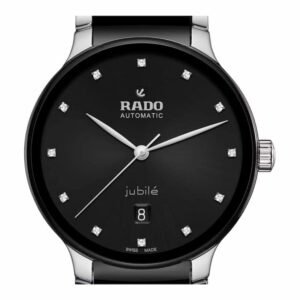
A Brand That Refused to Stand Still
When Rado introduced its rotating anchor logo in the early 1960s, it was already carving its own path in the watchmaking world. While most Swiss brands doubled down on tradition—classic chronographs, military tool watches, and conservative styling—Rado leaned into experimentation. Hardmetal cases, sapphire crystal, and high-tech ceramics were all part of its playbook decades before rivals caught on.
The spinning anchor reflected that spirit. It wasn’t just a logo. It was Rado saying, “We’re anchored in mechanical craft, but always in motion.” Like discovering a book that doesn’t follow the formula, it invited curiosity and rewarded those willing to go beyond the obvious picks.
Early Appearances in the 1960s
The first spinning anchors appeared in the Diastar line and later Golden Horse and Green Horse models. Nestled below the 12 o’clock marker, the anchor often sat inside a ruby jewel mount, rotating freely with the tilt of the wrist.
The effect was subtle but clever. The anchor wasn’t powered by the watch’s gear train. Instead, it spun freely, activated only by the tilt of your wrist. That meant it came alive only when someone wore the watch. In other words, Rado watches weren’t meant to be admired from a distance; they were meant to be lived with, activated by the rhythm of daily wear. A Rado moves in tune with you, its anchor responding naturally to your every motion.
Symbolism Meets Engineering
Maritime anchors have long symbolized stability and trust, values that every watch buyer looks for in their wristwear maker. Rado elevated that meaning by building the anchor into the dial itself, not as an afterthought but as a daily reminder of reliability and originality.
The Anchor in the Quartz Era
The 1970s brought quartz disruption, but Rado kept its identity intact. Even as the brand released models powered by quartz, the anchor remained. It was sometimes smaller, but never abandoned. Watches like the Dia 67, Manhattan, and Starliner paired it with bold case shapes, colorful dials, and geometric hands.
The anchor offered continuity through change, grounding the brand even as styles and technology shifted. While other brands scrambled to reinvent themselves, Rado’s spinning anchor served as a through-line, a reminder of its mechanical roots even in an increasingly digital age.
For collectors today, those details matter. And if you’re considering Rado watch repair to restore a vintage piece to full health, knowing the history of the anchor helps you identify originality and ensures the watch retains both its financial and historical value.
Collectibility and Authentication
The anchor is one of the most important clues for identifying genuine vintage Rados. A non-spinning or poorly installed anchor raises red flags, and a missing jewel mount can point to improper restoration. During professional watch repair, watchmakers often check whether the anchor spins smoothly and whether its mount is intact. If it doesn’t, it could indicate a redial or improper servicing.
That’s part of why the anchor remains a valuable tool for collectors. It’s so much more than a decoration or brand identifier. It’s functional, historical, and integral to verifying authenticity. Like a rare author signature in an old book, it’s the kind of subtle detail that separates originals from imitations.
Why the Anchor Still Resonates
Today, Rado continues the tradition, keeping the anchor alive in modern Captain Cook and Golden Horse models. Few brands can boast a design feature that’s both mechanically functional and stylistically consistent for more than 60 years.
In a market filled with heritage reissues, Rado doesn’t just reprint its past—it keeps the pages turning. The anchor moves as naturally now as it did in the 1960s, making every glance at your wrist feel like flipping to a familiar but still compelling chapter.
The Final Spin
Wearing a Rado is like finding that quiet, brilliant book in a sea of bestsellers. At first, it doesn’t demand attention, but once you notice the spinning anchor, you realize you’re holding something layered with meaning, craft, and history.
That’s the magic of Rado. These watches don’t shout for the spotlight. They reward the curious, the ones willing to step off the main aisle and explore the shelves a little deeper. Every piece feels like a story waiting to be told, with you as the next reader.
And just like that surprising book you can’t put down, a vintage Rado lingers. It leaves an impression, subtle but lasting, a reminder that the best finds aren’t the loudest but the ones you uncover quietly, tucked away, waiting just for you.