
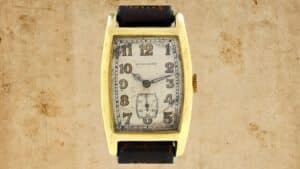
 Collectors understand this language well. They lean in close, not looking for perfection but for character. A flawless refinish may dazzle, but it strips away the verses that only years can compose. Patina is authenticity, a watch’s autobiography etched in tone and texture. It is proof that a timepiece has lived—through ordinary days and extraordinary ones—and survived with its soul intact. In fact, some of the most sought-after watches at auction are those with untouched dials, where buyers pay a premium not for perfection but for originality.
Of course, there’s more than one way to frame this poetry. Some owners choose to leave the crystal exactly as it is, cloudy or scratched, because it has aged right alongside the dial. Others prefer to polish or replace the glass, not to erase the years but to let them show more clearly—like cleaning the pane of a window so the view is unobstructed. Neither choice changes the poem itself. One keeps the words tucked behind weathered glass, the other lets them shine in the light. Both approaches reflect the personal relationship between owner and watch.
At Times Ticking, we’ve seen both philosophies honored. A 1940s Ingraham once arrived with a crystal so hazed it hid the dial completely; a careful polish revealed a surface aged into the color of parchment, its patina suddenly luminous. Another customer brought in a 1960s Bulova and insisted every scar remain, crystal and all, because that was the way his father wore it. Neither decision was wrong. Both stayed true to the watch’s story. These choices remind us that watches are more than mechanical instruments—they are heirlooms, companions, storytellers.
Patina also raises questions about value. In the marketplace, originality often wins. A watch with an untouched dial, even one speckled with age, can command more respect and higher prices than the same piece stripped of its history by refinishing. Yet value isn’t just monetary. For families who inherit a timepiece, the sentimental worth of seeing the dial exactly as it looked on a parent’s wrist can outweigh any collector’s chart. Patina, then, is not only about aesthetics but about memory, authenticity, and connection.
The truth is, patina can’t be remade. It takes half a lifetime for a dial to soften, darken, or fade into its unique character. That’s why so many collectors agree: don’t touch the dial. Let it stand as a record of everything the watch has endured. Clean the crystal if you like—or don’t. Either way, the charm is already there, etched into the face of time itself.
Patina reminds us that beauty isn’t always in the flawless, but in the passage of time. Every dial that has aged gracefully carries poetry only years could write. And in the end, that’s why we love vintage watches. They don’t just keep time—they show it, line by line, in the most human way possible.