
The Rebirth of Nivada Grenchen
Most watch companies spend decades trying to build a loyal following.
Nivada Grenchen spent decades discovering what happens when your followers refuse to let you disappear.
That may sound dramatic, but few stories in modern watchmaking are stranger. Most brands follow a predictable arc. They launch, grow, peak, decline, and eventually fade into obscurity. Their watches become antiques. Their advertisements become collectibles. Their names become trivia questions answered only by historians and the occasional enthusiast digging through estate-sale finds.
Nivada Grenchen was supposed to follow that script.
 Instead, something unexpected happened. Long after the company faded from relevance, long after the watch industry moved on, and long after collectors began chasing newer and more expensive names, Nivada’s watches started becoming more desirable than they had been during the company’s final years. The brand was gone, but demand remained. In some ways, Nivada Grenchen became a cult classic before anyone realized it was one.
That is what makes the company’s modern revival so unusual. Unlike many relaunches that begin with investors searching for customers, Nivada Grenchen began with customers searching for a company.
The story starts in 1926 in Grenchen, Switzerland, a town whose identity has long been intertwined with watchmaking. Founded by Jacob Schneider, the company quickly established itself as a maker of practical and innovative wristwatches. During the decades that followed, Nivada built a reputation not through luxury or exclusivity but through utility. These were watches designed to be used. Pilots wore them. Divers trusted them. Travelers carried them across continents. In an era before luxury sports watches became status symbols, Nivada was producing genuine tool watches for people who needed reliable instruments on their wrists.
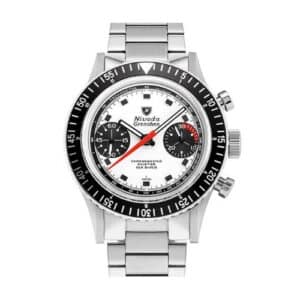
Among its most important creations was the Antarctic, a watch whose name reflected the spirit of exploration that captivated the world during the 1950s. The model became associated with endurance and reliability at a time when humanity was pushing deeper into some of the planet’s harshest environments. The company followed with the Chronomaster Aviator Sea Diver, a watch whose ambitious name remains one of the most wonderfully optimistic in horology. Rather than focusing on a single purpose, it attempted to be everything at once. It was a chronograph, a dive watch, and a pilot’s watch rolled into a compact package decades before the concept of a versatile sports watch became fashionable.
The Chronomaster was followed by models such as the Chronoking, Datomaster, and Depthmaster. Each contributed to a growing reputation for innovation and practicality. Nivada occupied a unique place within Swiss watchmaking. It was respected without being elite, adventurous without being flashy, and technically capable without carrying the price tags associated with the industry’s biggest names.
For a while, that formula worked beautifully.
Then the ground shifted beneath the entire Swiss watch industry.
The Quartz Crisis of the 1970s and 1980s remains one of the most disruptive events in horological history. As affordable and highly accurate quartz watches flooded global markets, traditional mechanical manufacturers found themselves fighting an increasingly difficult battle. Hundreds of companies disappeared. Some were absorbed by larger groups. Others vanished entirely. The industry that had dominated global watchmaking for generations suddenly found itself under siege.
Nivada Grenchen was among the casualties.
As the years passed, the company faded from prominence. Ownership rights became fragmented. The once-respected manufacturer slowly slipped from public consciousness. By the 1990s and early 2000s, Nivada had become one of many historic names that seemed destined to live only in collector circles and vintage catalogs.
That should have been the end.
Instead, it became the beginning.
While the company was dormant, a new generation of enthusiasts began discovering its watches. At first, it happened quietly. A collector would stumble across a Chronomaster and wonder why it wasn’t discussed more often. Another would buy an Antarctic and realize it offered a compelling alternative to better-known explorer watches. Dealers started noticing that certain references sold quickly. Auction results began climbing. Online forums filled with discussions about forgotten Nivada models that seemed strangely modern despite being decades old.
The more collectors studied the watches, the more they appreciated them.
What they found was authenticity. These were not watches designed by committees trying to manufacture heritage. They were products of a period when tool watches evolved through necessity. Their proportions felt right. Their designs possessed character. Their imperfections made them memorable. In an industry increasingly dominated by polished marketing narratives, vintage Nivadas felt refreshingly honest.
By the mid-2010s, something remarkable was happening. Collectors were no longer simply buying old Nivadas. They were actively searching for them.
The company had become more popular in death than it had been during its final years in business.
One of the people paying close attention was Guillaume Laidet.
Unlike many entrepreneurs entering the watch industry, Laidet was not interested in creating another brand from scratch. He believed there was value in preserving historic names that still resonated with enthusiasts. As he studied the vintage market, Nivada stood out. Here was a company whose products continued attracting passionate collectors decades after production had ceased. Demand already existed. Enthusiasm already existed. The challenge was not convincing people to care. The challenge was giving them a brand to care about again.
Securing the rights and rebuilding the company was not a simple task. Like many dormant brands, ownership and trademark issues had become complicated over the years. Yet the effort moved forward, and around 2020 the modern relaunch of Nivada Grenchen began taking shape.
What happened next may have been the smartest decision in the entire revival.
The company resisted the temptation to reinvent itself.
Many heritage brands return with watches that bear little resemblance to the products that built their reputations. Nivada took a different approach. It carefully studied its historic models and recreated them with extraordinary attention to detail. Rather than treating history as inspiration, it treated history as a blueprint.
The Chronomaster Aviator Sea Diver led the charge.
Collectors immediately recognized the faithfulness of the execution. The dimensions remained close to the originals. The dial layouts preserved their distinctive charm. The watch felt like a continuation of the story rather than a reinterpretation of it.
Success followed quickly.
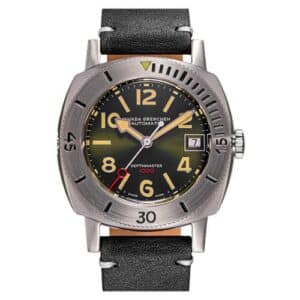 The Antarctic returned. The Super Antarctic followed. The Depthmaster resurfaced. The Chronoking and Datomaster rejoined the catalog. Eventually the company revived the F77, a sharp-edged integrated-bracelet sports watch originally introduced during the 1970s. The model became one of the surprises of the relaunch, appealing to enthusiasts who wanted vintage-inspired design without the staggering price tags associated with luxury integrated-bracelet watches.
Today’s Nivada Grenchen collection reflects both the company’s history and its future ambitions. The Chronomaster remains the centerpiece of the lineup and is available in numerous variations utilizing manual-wind, automatic, and meca-quartz movements depending on the configuration. The Antarctic collection continues to serve as a versatile everyday sports watch. The Depthmaster carries forward the company’s dive-watch heritage, while the F77 has emerged as one of its most successful modern offerings.
The movement strategy is equally pragmatic. Rather than pursuing expensive in-house calibers, Nivada focuses on reliable Swiss suppliers. Depending on the model, watches may feature movements from Sellita, Soprod, Landeron, or meca-quartz platforms that allow the company to deliver strong value while maintaining Swiss production standards. It is a practical approach that feels entirely consistent with the company’s historical identity.
Although the company proudly retains the Grenchen name, modern Nivada Grenchen operates very differently from the manufacturer founded nearly a century ago. Like many contemporary watch brands, it relies on a network of suppliers, partners, and specialists rather than a single vertically integrated factory. Yet the connection to Grenchen remains important. The town is not merely a location on a map. It is part of the brand’s DNA and serves as a reminder of where the story began.
What makes Nivada’s comeback so compelling is not simply that it survived. Other brands have survived. Other brands have returned.
Few have returned because collectors demanded it.
That distinction matters.
Long before the relaunch, enthusiasts had already preserved the company’s legacy. Every restored Chronomaster, every forum discussion about an Antarctic, and every auction battle over a rare Depthmaster helped keep the brand alive during years when the company itself seemed destined for history books.
Most watch relaunches begin with a business plan.
Nivada Grenchen began with a fan base.
That may be the most remarkable achievement of all.
Nearly a century after Jacob Schneider founded the company in Switzerland, Nivada Grenchen once again occupies a place within the watch industry. Its watches appear on wrists rather than only in collector showcases. Its name appears in conversations about modern releases rather than exclusively in discussions about vintage bargains.
And somewhere tonight, a collector will purchase a vintage Chronomaster built decades before the relaunch while another enthusiast orders a brand-new one directly from the company.
Both are participating in the same story.
One bought the watch that kept the brand alive.
The other bought the watch that proves it survived.