
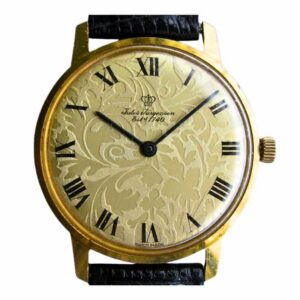
At first glance, your Jules Jurgensen watch might seem pretty straightforward. It tells time. It looks classy. But once you dig into its background, you realize you are holding something layered, complicated, and full of history. Owning one of these watches is a bit like finding out your quiet neighbor used to tour with a famous rock band. There is a lot more going on beneath the surface.
Whether you’re holding a Swiss-made original or a later American model, you’re tapping into a legacy that has seen both brilliance and disruption.
If you are wondering whether Jules Jurgensen watch repair is actually worth the effort, the brand’s history means that it usually is. Understanding the backstory helps you appreciate what you have and know how to care for it moving forward.
A Brand That Started With Precision Watchmaking
The story of Jules Jurgensen begins way back in 1740, when the Jürgensen family started watchmaking. That alone puts the brand in rare company. This was a time when watches were not accessories so much as marvels of engineering. Early Jules Jurgensen timepieces were built by skilled horologists who cared deeply about precision, durability, and design. These were not churned out by the thousands. They were carefully made, adjusted by hand, and meant to last.
By the 1800s, the brand had earned serious respect among collectors and watchmakers. Jules Jurgensen watches were refined without being showy. They were technically impressive without screaming for attention. If your watch dates back to this era or even the early 20th century, you are holding a piece of horological history that still commands admiration today.
When Ownership Changed, So Did the Watches
Like many long-running watch brands, Jules Jurgensen did not remain under one roof forever. Eventually, the original family lineage ended, and ownership shifted. By the mid-20th century, the brand transitioned from Swiss roots to American management. Over time, some manufacturing shifted to the U.S. as well.
That change mattered. Production increased, prices became more accessible, and the watches reached a wider audience. Later watches, particularly those produced from the 1960s onward, tended to favor affordability and mass appeal over the intricate work that defined earlier decades.
This does not mean later Jules Jurgensens are poorly made. Many are reliable, attractive, and enjoyable to wear. But if you compare them side by side with earlier Swiss-made mechanical models, the difference is noticeable. Think of it like comparing an original vinyl pressing to a digital remaster. Both play the music, but one carries a depth that the other can’t fully replicate.
Why Era and Condition Matter So Much
When it comes to collectibility, Jules Jurgensen watches are all about context. Early models from the 19th and early 20th centuries tend to draw the most attention. These timepieces often feature hand-finished movements, enamel dials, and precious metal cases. They were built in a time when watchmaking was equal parts science and art.
Condition plays a huge role, too. A well-preserved vintage Jules Jurgensen doesn’t just tell time. It tells a story. That’s why careful restoration matters. Done correctly, it preserves the watch’s originality while keeping it functional and stable.
Later models may not carry the same financial weight, but they often carry something just as important: personal history. A gift from a loved one. A watch worn for decades. Something passed down from a family member. Emotional value has a way of outweighing price tags.
Common Problems That Show Up With Age
No matter the era, time eventually leaves its mark. You might notice your Jules Jurgensen running fast or slow, stopping altogether, or feeling stiff when you wind it. Cracked crystals, worn straps, and tarnished cases are also common sights.
Most of these issues aren’t signs that the watch is beyond saving. They are signs the watch has been worn during a full, interesting life. Mechanical movements, in particular, respond well to proper cleaning, lubrication, and adjustment. Even watches that have been sitting dormant for years can often be brought back to life with the right care.
This is where professional watch repair becomes critical. Vintage watches are not forgiving of shortcuts. Proper servicing protects the movement from further wear and prevents small issues from turning into permanent damage.
Signs Your Jules Jurgensen Is Worth Fixing
If you are on the fence, there are a few clear indicators that repair makes sense:
- The movement is mechanical rather than basic quartz
- The case and dial are largely original and intact
- The watch has personal or family importance
If your watch checks one or more of these boxes, repair or restoration is well worth considering.
Restoration Preserves More Than Just Function
Repairing a Jules Jurgensen is not about making it behave like a brand-new watch. It is about respecting what it is and where it came from. A thoughtful restoration preserves original components whenever possible and uses period-appropriate parts when replacements are necessary.
This approach protects the movement, stabilizes performance, and keeps the watch wearable without erasing its age. Many owners find that after restoration, their watch feels even more meaningful. It becomes something you can actually use for special occasions or daily life, not just admire from afar. You are participating in history, not hiding it away.
The Modern Name Versus the Historic Reality
You may still see the Jules Jurgensen name online or at auctions today. Modern uses of the name exist, but they do not carry the same weight as the historic models. The brand today functions more as a legacy label than an innovator.
That reality makes what you already own even more important. Early mechanical Jules Jurgensen watches represent a level of craftsmanship the brand has not truly revisited. They are finite. Once they are gone, they are gone.
Deciding What to Do Next
If you own a Jules Jurgensen watch, the next step depends on your goals. Do you want to wear it again? Preserve it for future generations? Display it as part of a collection? Regardless of the answer, proper evaluation is key.
A qualified, experienced watch repair service can assess the movement, identify wear, and recommend appropriate service. Sometimes, light maintenance is enough. In other cases, a full overhaul ensures reliable performance for years to come.
Waiting too long can limit your options. With vintage watches, time works against you if issues are ignored.