
You set your Pulsar down next to the kitchen sink, wear it through a rainstorm without a second thought, or take it into the shower because the caseback says “water resistant” and you figure that settles it. Then one morning, condensation clouds the inside of the crystal. The dial has a slightly off look that was not there before. Something got in.
Water resistance in a watch is real and measurable. It’s also something that degrades, sometimes quickly and sometimes so gradually you don’t notice until the damage is done. Let’s look at what that rating actually means, and where it tends to break down.
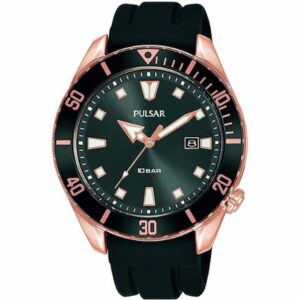
What a Water Resistance Rating Actually Means
The number on your Pulsar’s caseback, whether it reads 30 meters, 50 meters, or 100 meters, isn’t a depth guarantee. It is a pressure rating established under controlled, static laboratory conditions. A 30-meter rating means the watch successfully resisted the equivalent of 30 meters of static water pressure during testing. That doesn’t mean you can take it 30 meters underwater.
The distinction matters because real-world water exposure is never static. Splashing, impact, and movement all generate dynamic pressure that exceeds the rated figure by a significant margin. A 30-meter rating handles brief contact with water, like washing your hands or getting caught in light rain, but it offers no margin for submersion. A 50-meter rating adds room for shallow swimming in calm conditions. Only ratings at 100 meters and above, depending on the specific construction, begin to offer genuine protection during sustained aquatic activity.
There is also the question of time. The rating reflects the watch’s performance at the moment of testing. It doesn’t reflect performance years later, after the seals that deliver that rating have aged. The number on the caseback stays the same. The actual protection does not.
This gap between the rated figure and the real-world protection is where most owners get caught: they rely on what the caseback says without accounting for how old the seals behind it actually are or what kind of activity they’re doing.
Why the Rating Doesn’t Hold Forever
The components responsible for keeping water out aren’t permanent structures. They’re serviceable parts that wear with age and use. Once they fail, the protection they maintained disappears with them.
Gaskets form the primary line of defense. These small rings of rubber or synthetic material create watertight seals at the caseback, crown, and crystal. Over time, they dry out and lose elasticity, the same way an old rubber band left in a drawer turns brittle. Heat and UV exposure accelerate that process. A gasket that has hardened or developed microscopic cracks no longer forms a complete seal, and water finds its way through gaps invisible to the naked eye.
The crown is another common failure point. The crown stem passes through the case, and its seals are in contact with the environment every time you set the time or wind the watch. Wear, grit, and minor damage accumulate gradually. A crown that was once watertight may still feel and function normally while no longer providing reliable protection at the joint.
Temperature changes compound the problem. When a watch moves between hot and cold environments, the materials inside and outside the case expand and contract at different rates. A crown that seals well in a cool room may develop a small gap in hot water. A caseback gasket adequate in moderate weather may allow penetration on a hot afternoon near a pool.
Case damage adds another variable. A dent or deformation, even a minor one you can barely detect, can distort the channel that holds a gasket. Once the gasket no longer seats correctly, the seal is gone regardless of the gasket’s own condition.
The Hidden Risk in a Battery Swap
Quartz Pulsars need periodic watch battery replacement. Opening the case for that service is one of the most common ways water resistance disappears without the owner realizing it. If that seemingly simple service isn’t performed correctly, you end up with a watch full of condensation and a heart full of regret.
Every time a technician opens the caseback, they expose the interior of the watch. The caseback gasket, which sits in a groove along the inner edge, can be pinched, misaligned, stretched, or simply left out during reassembly. These aren’t dramatic failures. They’re small errors that leave the watch looking exactly as it did before, sealed up and apparently intact, while offering no meaningful protection from water.
The replacement battery used also matters. A battery of the wrong thickness or chemistry can affect how the caseback seats, which affects how evenly the gasket compresses. Uneven compression produces an uneven seal.
The correct procedure involves replacing the gasket along with the battery, resealing the caseback to the right specification, and pressure testing the case afterward to confirm the watch still meets its rated protection. The battery swap doesn’t usually take long. The steps that preserve water resistance around it take longer and require equipment that most quick-service counters don’t carry.
What Happens When Water Gets Inside
Water entry rarely announces itself immediately. In many cases, the first sign is condensation on the interior of the crystal, which forms when humidity trapped inside the case condenses during a temperature change. By the time you see it, water has been present inside the watch for some time. By then, the clock on the damage is already running.
Once moisture enters the case, it works on the movement. Metal components corrode. Steel parts develop rust. The delicate surfaces of gears and pivots, which depend on precise tolerances and thin lubricants to function, are among the first things affected. Corrosion on a pivot or jewel creates drag that disrupts timekeeping long before it causes visible damage.
Salt water accelerates corrosion substantially. Salt is corrosive on its own, and it draws additional moisture through absorption. A Pulsar worn in the ocean without adequate water resistance can sustain significant movement damage from a single exposure. That’s true even if it’s rated for 100 meters and you never got past waist-deep waves.
Even if condensation evaporates on its own, it still causes damage. It leaves behind mineral deposits, accelerates lubricant degradation, and creates conditions for continued corrosion at the component level. Water inside a watch movement isn’t a condition that resolves by letting the watch dry out. The components need to be disassembled, cleaned, dried, inspected for corrosion, and re-lubricated before they can function reliably again.
Keeping Your Pulsar Protected
Prevention is simpler and less expensive than repair, and the steps involved are straightforward.
Replace gaskets on a regular service cycle, typically every two to three years for a watch worn in conditions where water exposure is possible. This holds true even when the watch appears to be functioning well. Gasket replacement costs far less than movement repair, and it restores the protection the watch was built to provide.
Pressure testing is the only reliable way to confirm that a watch actually meets its rated protection after any service that involves opening the case. A visual inspection of the gasket is not equivalent or sufficient. Pressure testing subjects the closed watch to conditions that match its rating and confirms the seal holds before the watch goes back on your wrist.
Pulsar watch repair done correctly treats water resistance as part of the service, not an afterthought. A technician who opens a quartz Pulsar for a battery replacement should replace the gasket and confirm the seal before returning the watch. Skipping those steps saves a few minutes and leaves the owner with no way to detect that their protection is gone.
Matching your activity to the watch’s actual rating also extends protection between service intervals. A 30-meter-rated Pulsar degrades faster when regularly worn in steamy showers, hot tubs, or pools. Staying within the rating’s intended use slows that process considerably.
Keep the Rating Real
Water resistance in a Pulsar is a maintained characteristic, not a permanent one. The rating reflects engineering that works as designed when the seals are fresh and intact. That upkeep is on you as much as it’s on the watch.
A Pulsar that gets regular gasket checks and pressure tests keeps living up to its rating years after it leaves the factory floor. Skip that upkeep, and the number on the caseback turns into a formality instead of a promise. Keeping those seals in good condition is what keeps the rating real.