
Every few decades, someone declares the wristwatch dead.
First, it was electric watches. Then quartz. Then digital watches. Then smartphones. Each new invention was supposed to replace the little machine strapped to your wrist. After all, why wear a watch when your phone tells more accurate time, updates itself automatically, and does a thousand other things besides?
It seems like an open-and-shut case.
Except it isn’t.
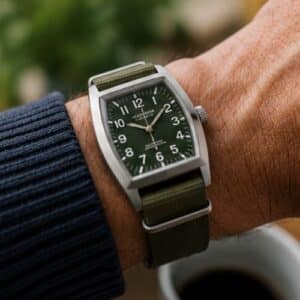 The strange thing about watches is that they’ve survived every challenge thrown at them. Not only have they survived, but some of the oldest mechanical watch designs in the world are more desirable today than they’ve ever been. Vintage watches regularly sell for thousands—or even hundreds of thousands—of dollars. Collectors search tirelessly for century-old pocket watches, and families still pass treasured timepieces from one generation to the next.
If watches are obsolete, someone forgot to tell the people who keep buying them.
So why do watches refuse to die?
The answer begins hundreds of years ago.
Long before wristwatches became fashion accessories, they were indispensable tools. Accurate time wasn’t a convenience—it was a necessity. Sailors relied on precision timekeepers to navigate across oceans. Railroad workers depended on standardized watches to safely coordinate trains. Pilots calculated flight times, soldiers synchronized attacks, divers tracked the precious minutes they could safely remain underwater, and doctors counted heartbeats. For generations, a dependable watch wasn’t a luxury. It was equipment.
Then the world changed.
Accurate time slowly became impossible to escape. It appeared on kitchen walls, dashboard clocks, office computers, microwave ovens, televisions, and eventually in every phone carried in every pocket. By all logic, the wristwatch should have quietly disappeared. There was simply no longer a practical need to carry a dedicated device whose only job was telling time.
Instead, something unexpected happened.
As people stopped needing watches to tell time, they started wanting them for entirely different reasons. A watch became one of the few things you could wear every single day without saying a word. It reflected personality, taste, and sometimes even ambition. A rugged field watch tells a different story than a slim dress watch. A well-worn vintage piece hints at an appreciation for history, while a family heirloom carries memories that no new purchase could ever replace.
Without anyone really noticing, the watch had transformed. It was no longer just a timekeeper—it had become a storyteller.
That transformation may be the greatest achievement in the history of watchmaking.
Think about the possessions people value most. Very few are cherished because they’re the newest. They’re valuable because of the stories attached to them: a wedding ring, a grandfather’s pocketknife, a handwritten recipe, or a faded photograph. A watch belongs in that company.
The scratch on the crystal from a camping trip. The dent in the case from years of daily wear. The engraving on the back marking a retirement, graduation, or anniversary. Every mark becomes part of the watch’s history—and your own. Over time, those imperfections stop being flaws and become chapters in a story that can’t be bought new.
That’s something technology rarely offers.
Most modern electronics are designed with an expiration date. A few years after they’re released, they’re replaced by something faster, thinner, or smarter. They become outdated almost by design.
A quality watch follows a completely different philosophy.
It’s built to be maintained. Its movement can be cleaned, adjusted, repaired, and restored. Worn parts can often be replaced, and a cracked crystal can be polished or renewed. With proper care, a mechanical watch can keep ticking for generations. That’s a remarkable idea in a disposable world.
Then there’s the craftsmanship. Even people who know very little about watches are fascinated when they see the inside of a mechanical movement for the first time. Tiny gears mesh together with incredible precision. Springs store energy. Jewels reduce friction. A balance wheel swings back and forth thousands of times every hour, regulating the movement with astonishing consistency. No batteries. No charging cable. No software updates. Just engineering refined over centuries.
Perhaps that’s why watch enthusiasts often speak less about accuracy and more about character. Two watches might keep identical time, yet one can feel completely different simply because of its history, design, or the memories it carries. Ironically, the more accurate clocks became, the less accuracy mattered.
In many ways, watches have become one of the last everyday objects that reward long-term ownership. They aren’t meant to be replaced every few years. They’re meant to accompany birthdays, promotions, vacations, weddings, and quiet Tuesday afternoons that seem ordinary until they’re memories. Over time, the watch changes, and so does the person wearing it.
Maybe that’s the real reason watches refuse to die.
They’ve never really been competing with smartphones, smartwatches, or whatever new technology comes next. They’ve been competing with something much older: our desire to hold onto moments that matter.
A watch reminds us where we’ve been. It marks achievements, survives adventures, and becomes part of family history. If it’s cared for properly, it may one day tell your story on someone else’s wrist. For an object designed to measure time, that’s a rather extraordinary legacy.
The watch industry has survived every prediction of its demise because it stopped selling time long ago. What it really sells is craftsmanship, history, memory, and legacy.
As long as those things matter, watches aren’t going anywhere.
They’ll keep ticking – one generation after the next.