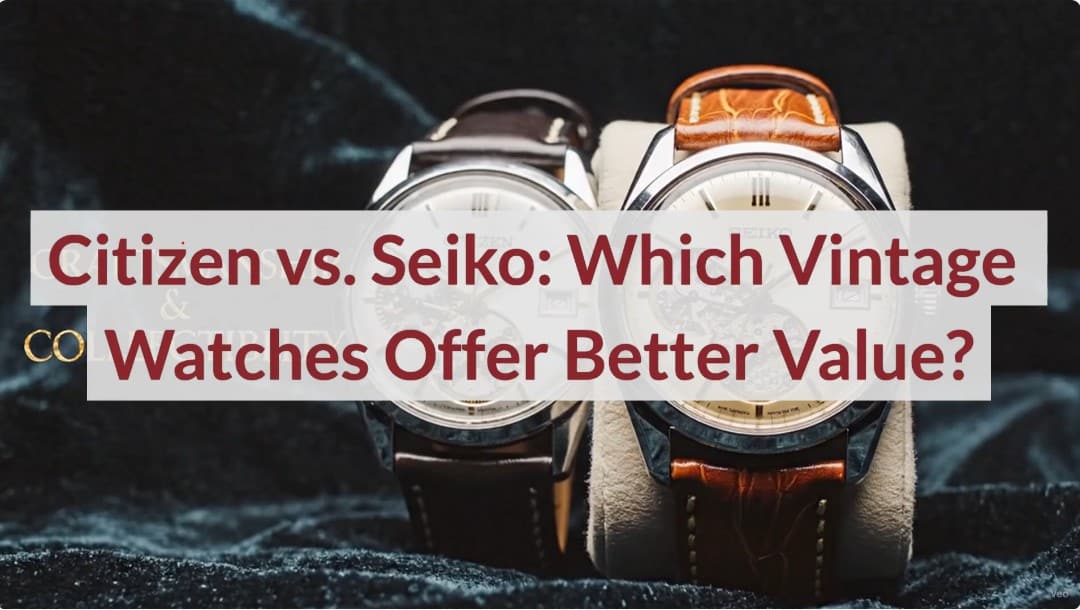
At some point in every vintage Japanese watch collector’s journey, the comparison becomes unavoidable. You’re browsing listings, you’ve got a budget, and there’s a Citizen in one tab and a Seiko in another. Both look pretty good, and you’re trying to figure out which one is the smarter buy. Welcome to the question that has launched approximately one million internet-forum arguments.
The honest answer is that both brands are excellent, and the “better value” question really depends on what you mean by value. If you mean resale strength, that’s one answer. If you mean getting the most watch for your money right now, that’s another. If you mean ease of ownership over the long haul, that’s a third. Let’s break it down.

What You’re Really Paying For
With vintage watches, the sticker price is never just about materials or build quality. You’re also paying for how well-known the brand is, how many people want the same watch you want, and how easily someone else can appreciate what you’re wearing when they glance at your wrist.
Seiko wins on recognition. It’s the kind of brand where even casually informed watch people can rattle off iconic references by name. That familiarity drives demand, and demand drives prices. It’s basic economics with a nicer dial.
Citizen operates in a quieter corner of the market. Fewer people are aggressively chasing the same watches, which means you can often find excellent pieces without getting into a bidding war.
The trade-off is that you need to do a little more homework. The vintage Citizen market has a wider mix of genuinely underappreciated pieces and basic everyday watches, and telling them apart takes some experience. But for the collector willing to do that work, the reward is real quality at a calmer price point.
Outstanding Movement Quality
This is not a situation where one brand phoned it in while the other changed the game. Citizen and Seiko both built strong in-house movements, and both produced watches that, with proper maintenance, can run reliably for decades. You’re not choosing between good engineering and bad engineering. You’re choosing between two different flavors of consistent quality.
Seiko produced an enormous range of movements, from no-frills daily wearers to high-grade calibers built for impressive accuracy and refinement. That variety is a big part of the appeal. You can build a collection of Seikos that covers dress watches, divers, chronographs, and field watches without ever leaving the brand, and every tier has something worth owning.
Citizen’s movements are equally dependable and often deliver impressive build quality at prices that don’t require deep breathing exercises before clicking “buy.” If your goal is a vintage watch you can actually put on your wrist every morning without treating it like a museum piece, a well-chosen Citizen can be a genuinely smart way to get there.
Collectability and Resale Markets
If resale value is part of your definition of value, Seiko has the clearer edge. The vintage Seiko market is active, certain references have devoted followings, and selling a recognized model in good condition is relatively straightforward. It behaves a bit like a blue-chip stock in the vintage Japanese watch world: not dramatic, but reliable.
Greater brand recognition often means a quicker sale, since more people may be interested in your watch. So it’s not just about price, but also about speed and ease of sale.
Citizen is more like a sleeper pick that experienced collectors quietly add to their rotations. The cost of entry is lower, which means your exposure is lower, even if the eventual resale isn’t as strong. You’re not going to flip a vintage Citizen for a dramatic profit in most cases, but you also probably didn’t overpay for it in the first place. For collectors who care more about wearing their watches than trading them, that math often works out fine.
Demand may be lower, but you’ll often find there are fewer pieces offered for sale, so you probably aren’t competing with hundreds of other similar listings.
Serviceability (The Part Everyone Forgets Until They Need It)
Here’s a variable that doesn’t get enough attention when people compare these two brands: how easy is it to actually get the watch serviced when something goes wrong? Because something will go wrong eventually. That’s not pessimism. That’s just vintage watches being vintage watches. No timepiece lasts forever without some care and attention.
Seiko generally has the advantage here. More watchmakers have Seiko experience, more donor parts are floating around, and there’s a substantial community knowledge base built up over decades. When you bring your vintage treasure in for Seiko repair, most qualified shops know what they’re looking at.
Citizen is still very serviceable in most cases, but certain less common references can run into parts availability issues, making Citizen repair more complicated. That’s not a reason to avoid Citizen altogether. It is a reason to buy with a little extra care. An experienced professional can give your watch everything it needs, even fabricating parts if they aren’t available. A vintage Citizen just means it’s more important than ever to work with a well-qualified repair expert.
When you’re evaluating a potential purchase, you can use a few practical checks:
- Look for a watch that runs consistently and sets smoothly
- Favor clean dials and cases that haven’t been heavily altered
- Ask about service history, especially for mechanical pieces
These checks don’t guarantee a trouble-free experience, but they improve the odds of starting your ownership on solid footing.
Design and Wear Experience
Both brands captured their eras well, and both have enough catalog depth that you can find something that fits almost any style or context.
Seiko tends to get more love for its iconic designs, particularly in sport and dive models. A lot of Seiko references are instantly recognizable, which adds a layer of enjoyment if you like wearing something with a clear identity that other watch people will clock immediately.
Citizen designs often lean more understated, which works in your favor if you want something distinctive without being loud. A vintage Citizen can look sharp in a dress or office setting without being flashy about it, and the sport models carry their own quiet character. If you want something distinctive without the “look at my watch” energy, Citizen often delivers that more naturally.
The best value here comes down to how you dress and how you wear your watches. If you want a watch that blends into daily life while still feeling special, Citizen can be an easy fit. If you want something that other collectors instantly recognize, Seiko usually delivers that.
So Which One Is the Better Value for You?
Here’s the short version: Citizen tends to win on value when the goal is quality at an accessible price. Seiko tends to win when the goal is recognition, demand, and long-term market strength.
- If you want a wearable vintage watch without paying collector premiums, Citizen is often the smarter move.
- If you want something with built-in name recognition and easier resale potential, Seiko is usually the safer bet.
If you’re still not sure, buy the one you can’t stop looking at, keep it properly serviced, and adjust your theory later. None of these other elements matters much if you don’t love the watch.
Either way, the real value in any vintage watch comes from buying a piece in solid condition and maintaining it properly. A well-kept vintage watch wears better, lasts longer, and holds its place in your collection regardless of market conditions. That part is true whether it says “Citizen” or “Seiko” on the dial.
Video